
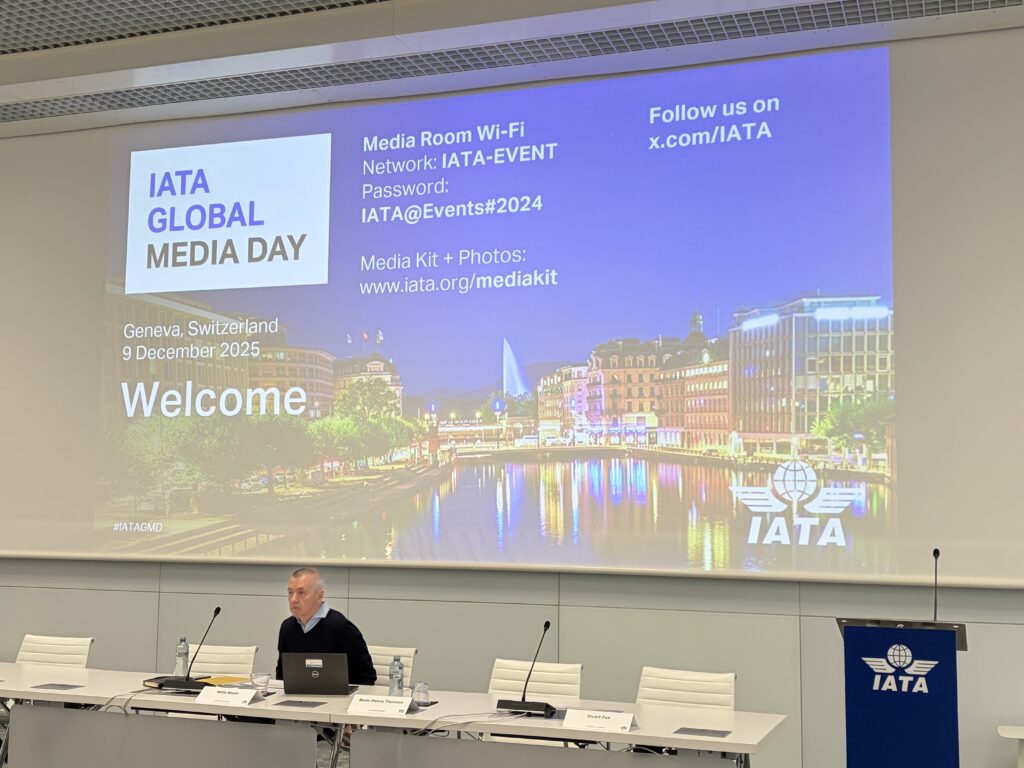
The global air transport industry is projected to achieve a record high net profit of $41 billion (35.2 billion euro) in 2026, marking a stable net margin of 3.9%, according to the latest Global Outlook from the International Air Transport Association (IATA).
The industry’s financial resilience is driven by robust passenger demand and record operational efficiency, even as airlines contend with persistent capacity constraints and a challenging path toward decarbonization.
Passenger Traffic Maintains Strong Momentum
While growth is moderating, passenger travel continues to demonstrate strength, allowing the industry to top $1 trillion in revenues for the first time in 2025.
-
Sustained Growth: Global passenger traffic (measured in RPK) is forecast to grow by 4.9% YoY in 2026. This marginal deceleration is attributed primarily to persistent supply-side constraints, including limited aircraft availability and labor shortages.
-
Record Load Factors: Capacity constraints are keeping passenger load factors high, projected at 83.8% in 2026. This high utilization supports yields and overall profitability in an otherwise turbulent operating environment.
-
Regional Drivers: The Asia Pacific region is set to lead growth at 7.3%, supported by strong economic momentum. North America, however, is forecast to see slower growth at 1.5% due to stagnating domestic demand and operational limits.
Record Profits Mask Low Margins
Airlines are maintaining a relatively healthy profit amid continuous cost pressures—particularly non-fuel costs like labor and maintenance—by diversifying revenue streams and maximizing fleet use.
-
Financial Performance: Industry net profit is forecast to reach $41 billion in 2026, with a stable net margin of 3.9%. IATA cautions that, despite this impressive achievement, the airline industry remains a low-margin business.
-
Regional Standouts: Europe is expected to deliver the highest net profit, bolstered by Turkey’s strong performance. The Middle East maintains the highest profit margins, while Latin America shows signs of structural improvement.
-
The Aircraft Shortage: The persistent global aircraft shortage is the industry’s most significant constraint, forcing airlines to operate older, less efficient aircraft and delaying fleet renewal. Normalization of the fleet supply is not expected until the early 2030s.
Decarbonization Efforts Under Pressure
The industry’s commitment to achieving net zero $\text{CO}_2$ emissions by 2050 is facing a critical headwind from the competition for renewable energy and a fragmented policy environment.
-
SAF Ineffectiveness: Sustainable Aviation Fuel (SAF), a key solution, is struggling to gain traction. SAF is projected to cover less than 1% of total fuel consumption in 2026, which IATA calls an “unambiguous verdict” on the current policy environment.
-
AI Competition: Growing electricity demand from data centers, driven by Artificial Intelligence (AI), is increasing competition for limited renewable energy supplies. This could make it harder and more costly to secure affordable inputs for SAF, potentially delaying aviation’s decarbonization.
-
Call to Action: IATA urges global policy makers to show the will to address the energy transition globally, calling for harmonization between initiatives like CORSIA and other regional policies that currently cause fragmentation and raise costs.
